

We interrupt our normal blogging to bring you something that burns. As usual.
Well, when I say it ‘burns’ I mean it can be frustrating that a lot of Diplomacy players these days seem to think it’s a good strategy when, actually, it simply shows poor play. In my opinion, that is.
I’ve written a number of times about Kingmaking (and that link will take you to my most recent post on my other site, The Diptionary).
Briefly, for those of you who don’t follow links, Kingmaking is when a player in a game decides to throw all their forces against another in an effort to help a third player to win the game.
Let’s be clear from the start: Kingmaking, while it can be frustrating, is a part of Diplomacy. It happens a lot more than people think, I believe, even in ‘top board’ or championship games. At the highest level, Kingmaking is almost always the last resort of a player who has nothing left to lose… including the game. For a lot of players who use the tactic, though, it is often used early, ineffectively and, in too many cases, as the first and only option.
Setting the Scene
Here’s an example of what happens far too often when Diplomacy is played by players whose game needs to develop strategically.
England and France have agreed an alliance. Together they attack Germany. Germany also faces pressure from Russia, and Germany falls.
England and France now have a choice to make. Their alliance is under pressure; although they’ve succeeded against Germany – their initial goal – the question is what both players choose to do now. In essence: What next?
England can move further east, moving units against Russia. At the same time, France can move south and east through the Mediterranean seas and, perhaps, Tyrolia and Bohemia, to take on Italy and/or Austria. If they choose this, then alliance can continue.
However, either could plan to attack the other while their back’s turned. In other words, they choose to end the alliance and stab their former partner in crime.
France, with a strong Italy in the Med, decides that there’s not a lot of growth there. However, with England tied down in the east, there’s a good chance of being able to launch an attack on England. And so, they do.
England, however, is a ‘Goon’, a player who puts vengeance ahead of everything else. Leaving aside the term ‘gooner’ (which is somewhat different) and that ‘goon’ is an Aussie slang for cheap wine, a goon was another name for a thug or henchman. It seems to fit this kind of player because it also meant a silly or clumsy person, because the strategy of the Goon is to throw their game away to take revenge on someone who has stabbed them.

England, then, turns away from Russia, throws everything in an act of retaliation against France and throws their centres to Russia. It is an act of suicide in the game, and the way Goons play the game should they be stabbed.
(Actually, the modern, sexualised meaning of ‘gooner’ – someone who spends their time masturbating over images online – is possibly pretty apt for this type of play, too.)
Should France have stabbed?
Before looking at the actions of the Goon in England, let’s have a look at what France did. After all, if France hadn’t stabbed England, England wouldn’t have shown their Goon colours.
Potentially, there was truly nothing else for France to do if they were to keep growing. It isn’t unusual for the E/F alliance to break down after Germany has been beaten, especially if Italy is fairly strong.
At this point, then, France had to make a decision: stab England, or remain allied and try to affect the game through diplomacy rather than military might.
Actually, France should probably have been trying to solve the problem before it arose. At some point, France and England are going to find themselves in the described situation. France, then, should have been using diplomacy to find a way to either prevent England from being able to resist a stab, or to weaken opposition in the Med.
For me, France should have looked for other options. Launching an attack on an ally at the point described above is, for me, suboptimal. England isn’t weak enough at this point to overcome easily, and the result of such a stab is likely to limited. It is what I call a Raglan Stab1.
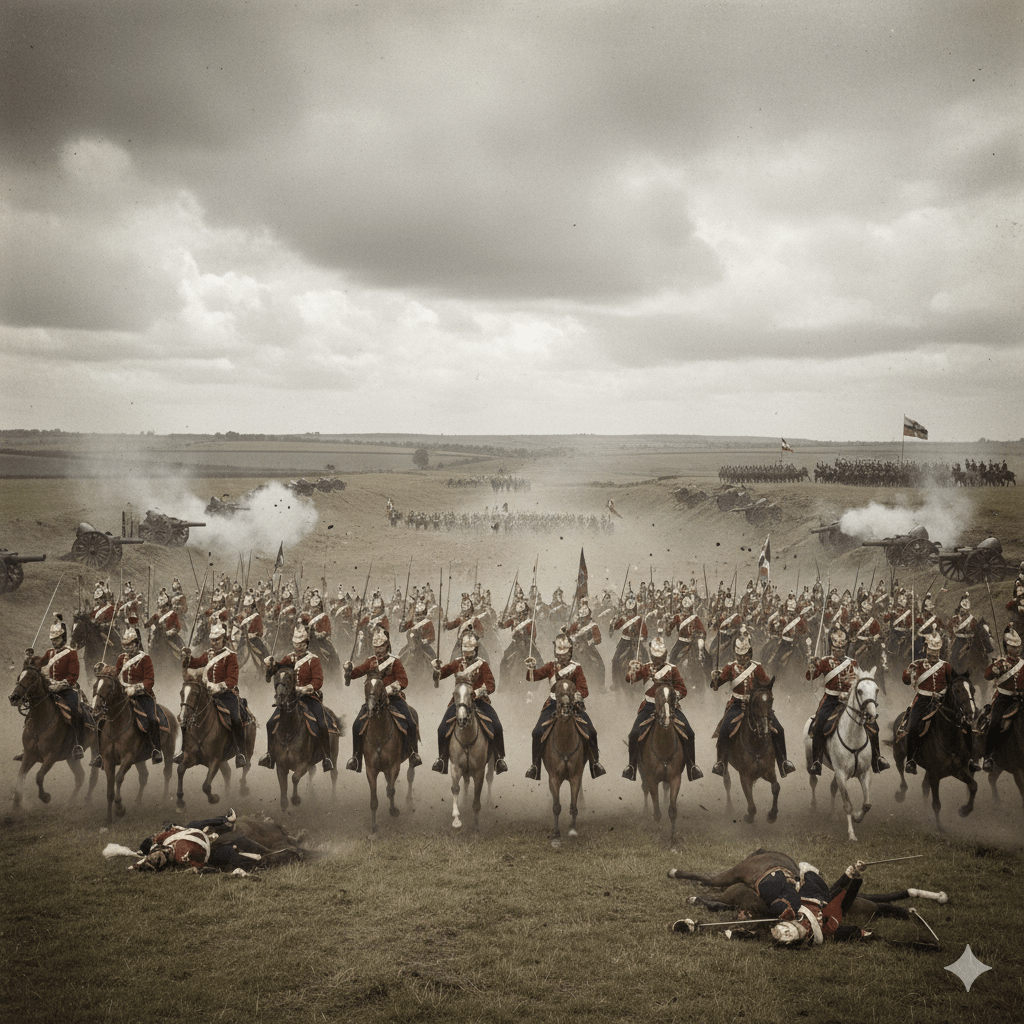
What France could have done is play it slow from here. Remain allied with England, exhort English help to push west alongside England against Russia, or – as England grew – push England to allow France to take English SCs on the continent to grow as the (slightly) weaker partner. This would have allowed France the time to work on destabilising the Mediterranean and make progress there.
But they didn’t. They went for the stab. Not the best choice but the choice they made.
There had to be an expectation that England would retaliate or readjust their units to defend. And perhaps that England would choose to suicide, to launch the ‘Goon’s Defence’2, against France.
England’s Choices
Now lets look at what England’s reaction could have been to France’s stab.
Unless France was able to launch a good stab, one that effectively took England out of the game, choosing the role of the Goon is the worst option open to England. In doing this (which isn’t Kingmaking!), England has removed any chance they have of winning the game. Surviving, perhaps, but not of either soloing or finishing top of the board. They’re throwing their game away and that is always the last resort.
What I’ve found, in discussions about Diplomacy with players who make a lot of noise in a public format, is that there is a lack of appreciation for the role diplomacy has to play in the game. Somewhat ironic, don’t you think?
A Goon will often warn a prospective ally that if the other player stabs them they’ll suicide rather than let the stab stand. In other words: “Stab me and I’ll make sure you lose the game.”
There are times when this is absolutely acceptable, when this is actually Kingmaking. If the game is getting to the end, and your ally stabs you, the chances are that your options are more limited. At this point, if the stab was ineffective, you’re in a position to prevent any real success and also to manage the game so that someone else can gain success. But you are still condemning yourself to either elimination or failure. You’re still throwing the game away.
If the stab was effective, and you’re facing the threat of elimination as a result, then you are more justified than ever in Kingmaking. There’s absolutely nothing to lose at this point! However, you could also become another player’s ‘Janissary’, a puppet and deliberately kept alive. There is at least some chance of survival to the end of the game by taking this option.
The problem with these options is that it takes diplomacy to set them up. In the example above, what’s to stop Russia from simply attacking England anyway, becoming a de facto ally of France in destroying England? Only England’s diplomacy, either in moving other players to weaken Russia, or in persuading Russia that they’re better off with you as a bulwark against France.
Goons tend not to want to make the effort. Someone who tells you they’ll throw the game if you stab them tend to not have the knowledge, skills or commitment to look for any other option. They’re not able to play the game well enough diplomatically to allow such options.
That may be a false assumption. Perhaps they have the diplomatic skills required but they choose the role of the Goon through anger, frustration or simple vengeance.
However, whatever the reason – or excuse – behind the actions of a Goon, the Goon’s Defence is, more often than not, going to result in the failure of the Goon to get anything from the game. That, to me at least, is nonsensical… unless it is the last resort and a true act of Kingmaking. And even then it is still a negative outcome.
Why do they do it?
I read one reason for the Goon’s Defence on the Diplomacy sub-reddit: “It will teach them not to stab me next time.” OK, I get that: the metagame argument.
There is a lot written about Diplomacy being a game of reputation. “Oh, they’re a good ally.” “They’re a stabber.” “They lie all the time.” Your reputation as a player often precedes you.
This is natural. If you understand how someone plays the game, you can make educated choices about how you’re going to relate to them in a game. An opportunist is someone who needs watching carefully and be defended against. A good ally is someone you can work with long-term and have a large degree (but never complete) of trust that they’ll not stab you. Given that the game is about cooperation and trust, this level of understanding is important.
But I’m not sure that the argument that the Goon’s Defence will make the player you launched it against you think several times about stabbing you in the future holds any more water than a sieve.
Let’s assume your punitive Goon’s Defence succeeds in this game. The stabber is chastised and forced eat humble pie. What does it tell them about you? Simply this: when they stab you next time, they need to wait until they can launch a successful stab. They need to be more Machiavellian: “If an injury has to be done to a man it should be so severe that his vengeance need not be feared.“3
Another lesson to take, for the stabber, is that they can likely believe that you are a player they can trust. That’s not a bad thing, of course. It may mean that, in the future, if they can build an alliance with you (assuming that your Goon’s attitude doesn’t simply carry the mistrust automatically from game-to-game) they can put money on the fact that you won’t stab them. That isn’t necessarily good for you, though; it means they don’t have to worry about you and can play with more freedom.
A possible third lesson is that they can use your Goonish nature against others. Perhaps they can persuade an ally of yours to stab you in another game, and they get the boon from the resulting action.

This certainly isn’t achieving the outcome you wanted. Rather than teaching the other player to never try to stab you again, you’re providing them with fodder for a future game!
I’m also at least partially convinced that this kind of play can be attributed to the kind of play we see when the diplomatic skills in the game are downplayed.
Online, game deadlines are short. One day deadlines, as I’ve argued before, aren’t conducive to strong diplomatic play. They simply don’t provide the time to allow for this.
This means that a new player feels this aspect of the game is secondary to the tactical aspect – moving units on the map. Messages between players are brief; messages are focused on neighbours and allies. There simply isn’t time for doing anything else.
This also means that players aren’t given the chance to develop good diplomacy skills. When faced with the situation described above, England isn’t encouraged to work on other players, getting them to attack France to draw the sting from the stab, and give England a way back into the game.
Final Thoughts
The Goon’s Defence is a failure on multiple levels:
- It is a failure to investigate other options that might provide a way back into the game following a stab.
- It is a failure to manage the game following a stab so that you have the chance to survive.
- It is a failure in understanding the game.
Stabs are part of the game, both good ones and bad ones. At some point, someone is going to stab you. Using the Goon’s Defence as a strategy does nothing positive for you. Yes, it might successfully punish the stabber but for what gain?
In fact, threatening another player with retribution if they stab you, shows them that they are working with someone who may well be a weak player. It shows them that you’re not likely to be effective in your diplomacy. If nothing else, it shows them that you’re poor at persuasive diplomacy and use bullying or threatening warnings because of this.
And, most of all, if you threaten this, it warns the other player that they should wait to stab you until they’re in the position to do so optimally. They’re not going to change their thinking so that they decide that you can’t be stabbed safely!
NOTES
- Named after the British general who launched the charge of the Light Brigade during the Crimean War, a Raglan Stab is one which results in no significant advantage to the stabber. ↩︎
- This is what I call the suicidal actions of a Goon, as described above. ↩︎
- Machiavelli, N. “The Prince.” Ch 3. Published in 1532. ↩︎

 THE DIPLOMATICON
Leave a comment